Todos los proyectosAll projects
Juego de Ingenio
2016
«Desafío Espacial», un rompecabezas electrónico de lógica adaptable a distintas edades, pensado para la estimulación cognitiva.“Space Challenge”, an electronic logic puzzle that adapts to different ages, designed for cognitive stimulation.
- Creado porCreated by
- Alumnos de la Licenciatura en Artes Electrónicas (UNTREF)Students of the BA in Electronic Arts (UNTREF)
- UsoUse
- Estimulación cognitiva en neurorrehabilitaciónCognitive stimulation in neurorehabilitation
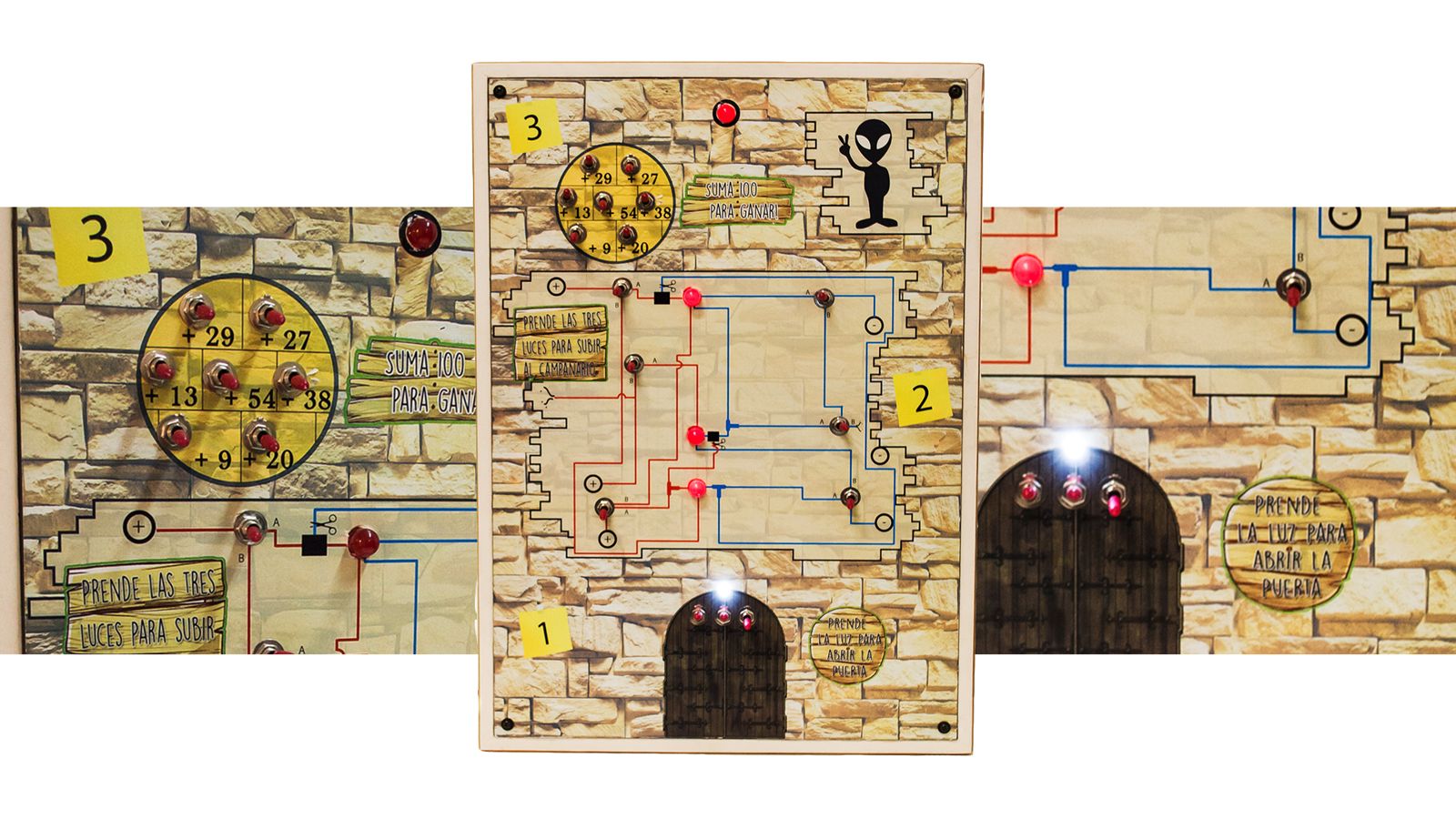
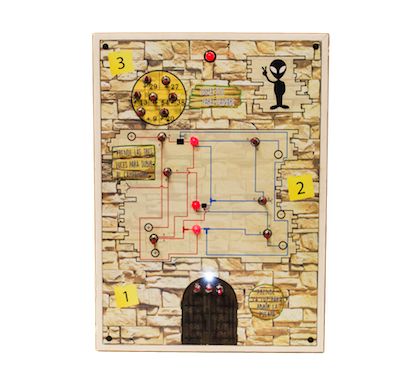
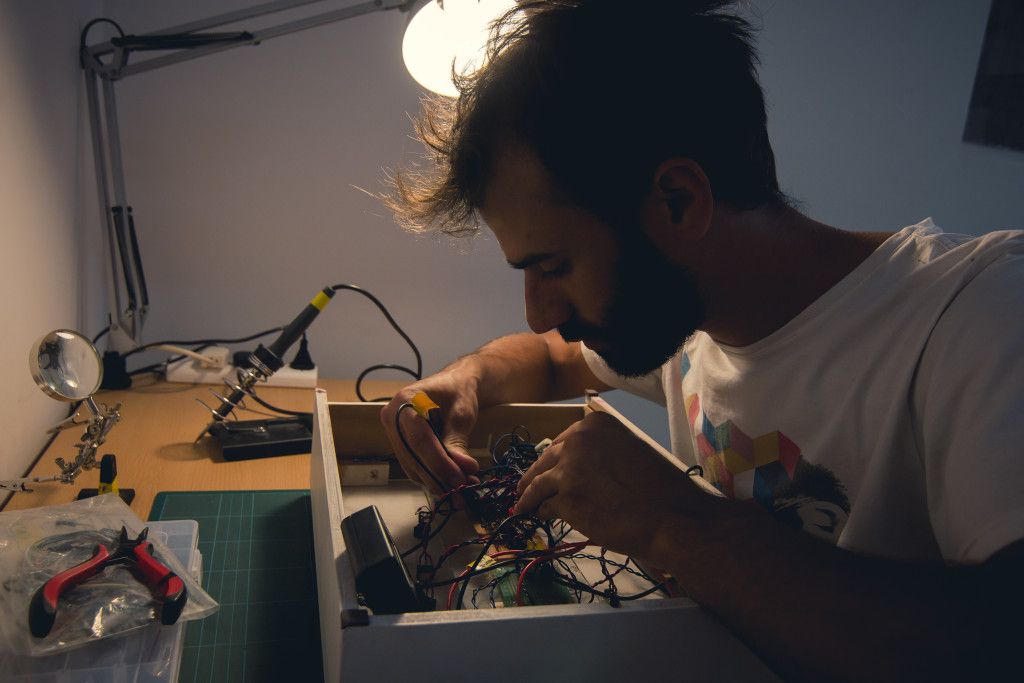
El dispositivo es un juego de lógica y operaciones apodado «Desafío Espacial». Lo crearon alumnos de la Licenciatura en Artes Electrónicas de la Universidad Nacional de Tres de Febrero, y se desarrolló en el Departamento de Arte y Ciencia del MUNTREF. Con principios básicos de electrónica, propone tres problemas de dificultad creciente: para resolver cada uno hay que dar con una combinación específica de llaves. La forma de resolver cada nivel y la dificultad general se adaptan a distintos escenarios con láminas temáticas intercambiables, así que el juego sirve para distintas edades e intereses.
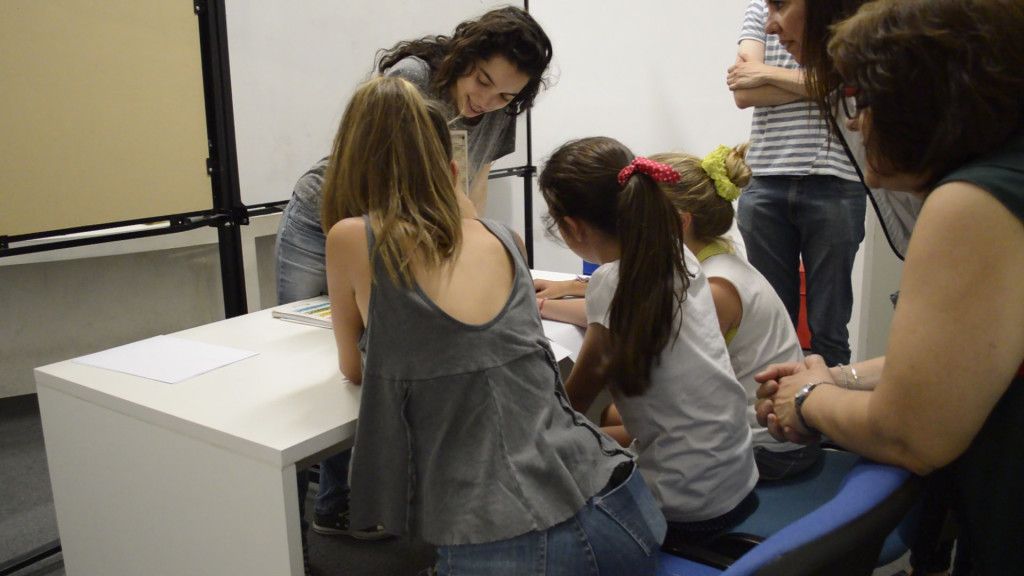
Lo propusimos como herramienta de estimulación cognitiva dentro de tratamientos de neurorrehabilitación, para que los profesionales actualicen sus herramientas de trabajo y aumenten la motivación de sus pacientes. Permite trabajar distintos objetivos del área de forma integral y armar estrategias para resolverlo de manera gradual. Profesionales de la psicología cognitiva que lo usaron con sus pacientes reportaron muy buenos resultados: más motivación, un interés notorio por resolver problemas matemáticos y mejor rendimiento cognitivo que con ejercicios en fotocopias.
The device is a logic and arithmetic game nicknamed “Space Challenge”. It was created by students of the BA in Electronic Arts at the Universidad Nacional de Tres de Febrero and developed at MUNTREF’s art and science department. Using basic electronics, it sets three problems of increasing difficulty; solving each one takes a specific combination of switches. Interchangeable themed sheets change how each level is solved and how hard the game is overall, so it works for different ages and interests.
We proposed it as a cognitive stimulation tool in neurorehabilitation, to give professionals a new working tool and their patients more motivation. It lets therapists work on several goals at once and plan for the game to be solved step by step. Cognitive psychologists who used it with their patients reported very good results: more motivation, a clear new interest in solving math problems, and better cognitive performance than with photocopied exercises.